Bulcode

Share this article:

Blog
Nov 20, 20224 min read

What is Scrum?

Svetoslava Angelova

Head of Delivery

What is Scrum?

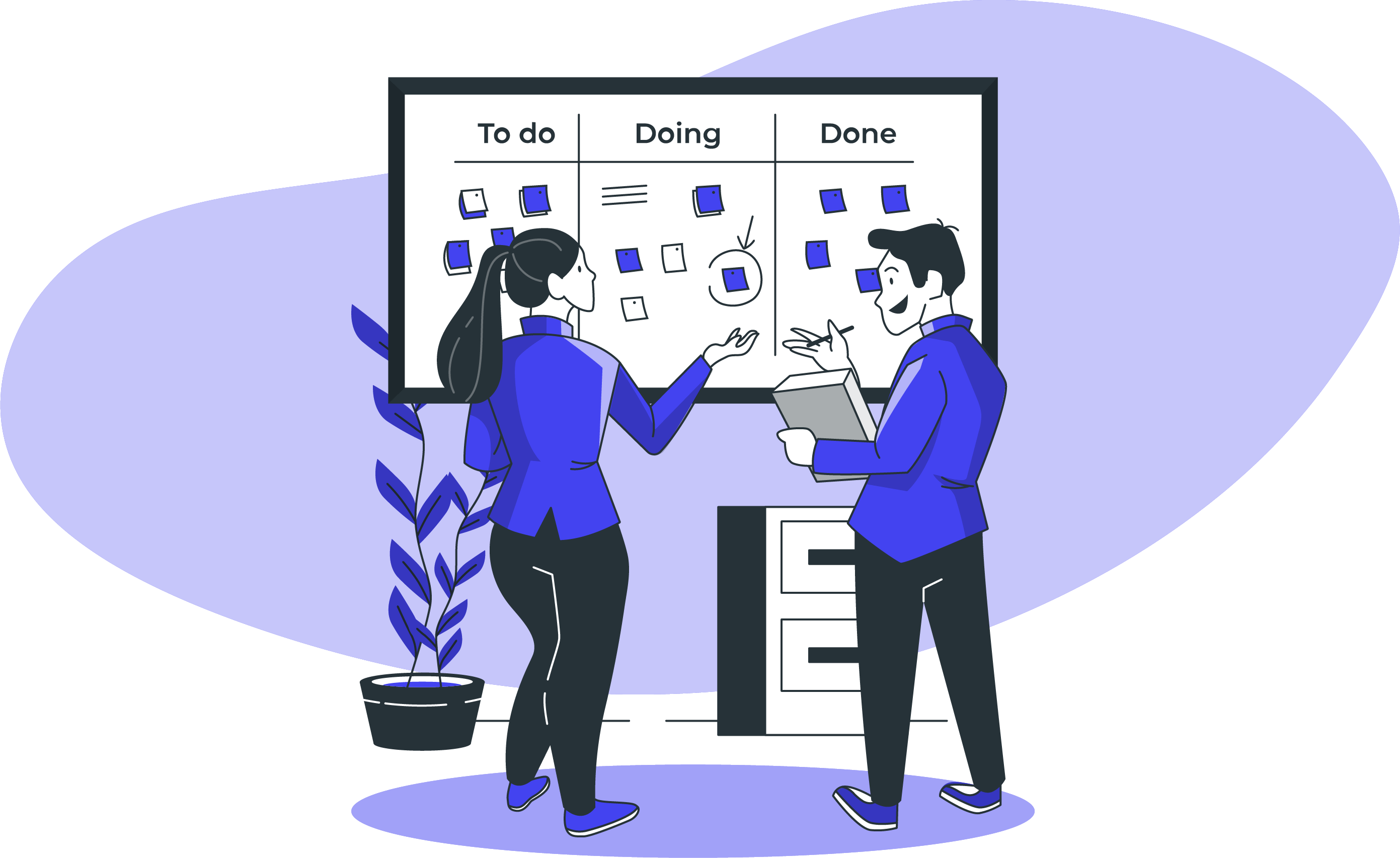
Scrum is a part of the Agile methodology. It is the most popular framework for agile development, and it is a simple process framework.

A "process framework" is a set of rules that a process must follow in order to be in line with the framework. (For instance, the Scrum process framework calls for development cycles called Sprints, while the XP framework calls for pair programming, etc.)

"Lightweight" means that the process has as few extra steps as possible so that as much time as possible can be used to get useful work done. A Scrum process is different from other agile processes because it uses certain ideas and methods, which can be put into three groups: Roles, Artefacts, and Time Boxes.

Scrum is most often used to manage the development of complex software and products by using iterative and incremental methods. Compared to traditional "waterfall" processes, Scrum makes a big difference in how much work gets done and how long it takes to see results. Scrum processes let organisations adapt easily to requirements that change quickly and make products that meet changing business goals. An agile Scrum process helps the company because it lets it:

  • Improve the quality of the products;
  • Handle change better (and expect the changes);
  • Estimates are more accurate and take less time to make;
  • To be more in charge of the project schedule and state.

What are the requirements for Scrum?

Scrum doesn't say exactly how requirements should look. Instead, it just says that they go into the Product Backlog and are called "Product Backlog Items," or "PBIs" for short. Since a sprint has a set amount of time, we can also assume that each set should take much less time to implement than the sprint itself. Most Scrum projects take the "Extreme Programming" (XP) method of calling a feature request a "User Story," but a small number of projects still use the older term "Use Case." In this blog post, we will go with what most people think and talk about three fairly standard requirements artefacts that can be found in product backlogs.

  • User story

    In the form of a story, a “user story” describes the desired feature (functional requirement). User stories are usually written by the Product Owner, who is also responsible for them. The format is not standard, but it usually has a name, some descriptive text, links to outside documents (like screenshots), and information about how the implementation will be tested.

  • Story

    Not all requirements for new development are user-facing, but they all mean that a lot of work needs to be done. Most of the time, but not always, these requirements are work that needs to be done to support features that end users see. We call these requirements that don't have anything to do with the function "Technical Stories." Technical Stories have the same parts as User Stories, but they don't have to be written as stories if it doesn't help. Most of the time, team members write the technical stories that are then added to the Product Backlog. The Product Owner needs to know about these Stories and how they relate to User Stories in order to rank (sequence) them in order to be built.

  • Bug

    A defect, also called a bug report, is a description of how the product doesn't work the way it should. Defects are kept in a system for tracking bugs, which may or may not be the same system that stores the Product Backlog. If not, the QA (usually the Product Owner) has to add each defect to the Product Backlog so that they can be scheduled and put in the right order.

Conclusion

In today's highly competitive global environment, the amount of time needed to bring new software products to market has shrunk by a factor of ten. Beginning with market research on a concept or the needs of a client, the product life cycle or system development process continues all the way through system deployment and operation. The scrum manifesto is required to rapidly develop a system and to meet changes in requirements initiated by the customer even late in the development stage. This is because of the global competition and the change in customers' needs, which resulted in the Agile Manifesto. Scrum is becoming more and more popular, and this trend is likely to continue for many years.

Share this article:

Related Blog Articles

    Blog

    Scrum artefacts

    In software development, the term “artefact” refers to information that stakeholders and the scrum team use to describe a product that’s being developed.

    Written by Svetoslava Angelova
    Nov 23, 20222 min read

    Blog

    Scrum events

    Scrum defines several events (sometimes called ceremonies) that occur inside each sprint: sprint planning, daily scrum, sprint review, and sprint retrospective.

    Written by Svetoslava Angelova
    Nov 22, 20223 min read

    Blog

    Roles in Scrum

    Scrum roles and how you can fold them into your organisation.

    Written by Svetoslava Angelova
    Nov 21, 20224 min read

    Blog

    Building a high-performing Agile team: Our proven approach

    Discover how we build high-performing Agile teams by defining clear roles, fostering collaboration, and using flexible tools.

    Written by Svetoslava Angelova
    Aug 27, 20248 min read

    Blog

    What is Agile and why we use it?

    Agile is a time-boxed, iterative method to software delivery that aims to provide software gradually throughout the project rather than all at once near the end.

    Written by Svetoslava Angelova
    Sep 15, 20225 min read

    Blog

    Hire dedicated software developers (teams)

    Tired of rising expenses with your in-house development team? Why not get a dedicated team at 40% to 60% of the cost?

    Written by Mihail Shahov
    Jul 17, 20203 min read

    Blog

    Why startups hesitate to work with a bespoke software development agency – and how we address every concern

    Startups often hesitate to work with software agencies due to concerns over cost, control, and flexibility. Discover how Bulcode’s bespoke software solutions address each challenge, ensuring growth and agility.

    Written by Svetoslava Angelova
    Nov 05, 20245 min read

    Blog

    Single Directory Components in Drupal core: A comprehensive overview

    Explore how Single Directory Components (SDC) in Drupal Core streamline the development process by encapsulating component-related files into a single directory. Learn about the benefits of SDCs and follow a step-by-step guide to implement them in your Drupal projects.

    Written by Nikolay Tsekov
    Aug 07, 20244 min read

    Blog

    Drupal 11: What to expect? Comprehensive guide to new features and enhancements

    Drupal 11 is out! In this article, discover its exciting features and improvements. Upgrade now to redefine your digital strategy with Bulcode's expert support.

    Written by Svetoslava Angelova
    Aug 05, 20247 min read

    Blog

    Controlled Agile: Striking the perfect balance in hybrid project management

    Controlled Agile, a fusion of traditional project management and agile methodologies, emerges as a pivotal strategy in software development, balancing predictability and adaptability.

    Written by Mihail Shahov
    Mar 19, 20247 min read

    Blog

    Unveiling the power duo: Next.js as the Headless frontend of Drupal 10

    Discover the dynamic synergy between Drupal 10 and Next.js, as this powerful combination reshapes the landscape of web development. Next.js, an open-source React-based framework, is seamlessly integrated as the headless frontend of Drupal 10, offering a plethora of benefits. From enhanced performance with features like automatic code splitting and server-side rendering to flexible design and SEO-friendly capabilities, this collaboration empowers developers to create high-performing, scalable, and visually appealing web applications. The efficient content management of Drupal 10 coupled with Next.js' adaptability to trends ensures a cutting-edge development approach, positioning this tandem at the forefront of modern web development practices. Embrace the future with the Drupal 10 and Next.js combination, redefining how we approach and craft dynamic online experiences.

    Written by Todor Kolev
    Feb 07, 20245 min read

    Blog

    The importance of the right development partner in your software development life cycle

    Unlocking success: The art of choosing the perfect software development partner. Explore the pivotal role of partners in software development, uncover ROI secrets, and stay ahead of industry trends in this must-read article.

    Written by Mihail Shahov
    Sep 26, 20238 min read

    GET IN TOUCH

    Have a project you'd like to launch?